

Planning a new home, a renovation, or an upgrade to your current place? Understanding residential electrical installation helps you avoid dangerous shortcuts and costly rework. This guide explains the basics in plain language: how power reaches your home, what the main parts do, and how to work safely with a qualified electrical contractor in Malaysia.
How Power Reaches Your Home
Electricity comes from the TNB supply line into your home’s meter, then to the distribution board (DB box). From there, power is split into separate circuits for lights, power sockets, air conditioners, and other appliances. In Malaysia, most homes use single-phase supply, while larger homes may use three-phase.
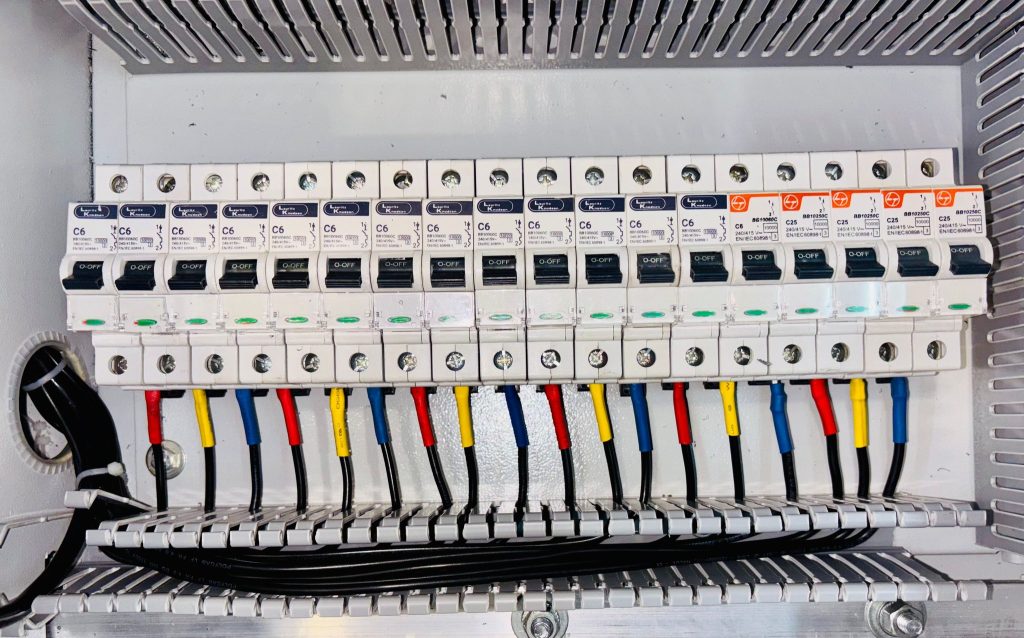
Every circuit should have its own MCB (miniature circuit breaker) to stop overloads. Your DB box should also have earth leakage protection, often called an RCD or ELCB, which cuts power quickly if current leaks to earth. This is a key safety feature, especially in wet areas like kitchens and bathrooms.
Common Residential Electrical Installation Jobs
Residential electrical installation covers more than just new builds. Here are the jobs homeowners ask for most often.
New Wiring and Rewiring
New wiring is planned around your layout and appliance load. Rewiring replaces old or damaged cables, which is common in older terrace houses and shoplots converted into homes. Proper electrical wiring services include correct cable sizing, conduit routing, and clear circuit labelling.
Adding Sockets and Circuits
Extra air conditioners, water heaters, and kitchen appliances need dedicated circuits. Adding a socket to an overloaded circuit is risky. A proper load calculation checks whether your DB box and cabling can handle the extra demand.
Upgrading the DB Box and Earthing
Older homes may have small DB boxes with too few ways, or weak earthing. Earthing gives fault current a safe path to the ground. Upgrading the DB box and earthing improves protection for your family and your appliances.
Safety Points Every Homeowner Should Check
Good electrical installation services follow MS IEC wiring standards and put safety first. You can do a simple visual check at home:
- Is your DB box clearly labelled, with no exposed live parts?
- Does the RCD/ELCB trip when tested using its test button?
- Are there any warm sockets, burning smells, or flickering lights?
- Are cables run in proper conduit, not taped or hanging loosely?
- Do wet areas have suitable protection and correct IP-rated fittings?
If you notice any of these issues, stop using the affected circuit and call a licensed electrician. DIY wiring is not worth the risk. Faulty wiring can cause shocks, fires, and damage to expensive appliances.
Repair, Maintenance, and When to Call a Professional
Even well-installed systems need attention over time. Electrical repair Malaysia homeowners commonly need includes tripping breakers, dead sockets, faulty switches, and burnt wiring. These should be traced to the root cause rather than patched over.
Regular electrical maintenance services help catch problems early. A typical check includes tightening DB box connections, testing RCD/ELCB operation, checking earthing resistance, and inspecting cables for heat damage. This is especially useful for homes with heavy air-conditioning use or home offices with many devices.
For larger jobs, an experienced electrical contractor Malaysia homeowners trust will handle TNB supply applications, three-phase upgrades, and site coordination. Always confirm the person doing the work is competent and licensed for the scope involved.
Ready to make your home’s electrical system safer and more reliable? Contact our friendly electrical team at nishamelectrical.com.my to book an inspection, request a quotation, or arrange a site visit. We will assess your needs, explain your options clearly, and carry out the work safely and neatly.