

When your factory line stops or your office lights flicker, every minute counts. Industrial electrical troubleshooting is the process of finding the cause of an electrical problem and fixing it safely. It covers everything from a tripping distribution board (DB box) to a faulty three-phase motor circuit. In Malaysia, this work must be done by a competent electrician who understands MS IEC wiring standards and TNB supply requirements. This guide explains how troubleshooting works, what to expect, and how to prevent problems before they happen.
What Industrial Electrical Troubleshooting Really Involves
Troubleshooting is not just swapping parts until the power comes back. It is a step-by-step process to find the root cause of a fault. A good electrician will first ask what happened, then test the system safely, then repair and confirm the fix. For industrial sites, this often means working with three-phase power, control panels, and heavy machinery.
The goal is to restore power quickly without compromising safety. That is why an experienced electrical contractor Malaysia businesses trust will follow a clear method rather than guesswork. They will also document what they find so you can plan preventive maintenance.
Common Electrical Faults in Industrial and Commercial Buildings
Most faults fall into a few familiar categories. Knowing them helps you describe the problem clearly when you call for help.
- Tripping ELCB/RCD: The earth leakage device trips when current leaks to earth. This can be caused by damp wiring, damaged insulation, or a faulty appliance.
- Overloaded circuits: Too many machines or devices on one circuit can cause the MCB (miniature circuit breaker) to trip repeatedly.
- Loose connections: Vibrations in factories can loosen terminals, leading to overheating or intermittent power.
- Faulty control panels: Relays, contactors, and sensors can fail, stopping production lines.
- Voltage drops: Long cable runs or undersized cables can cause motors to run hot or fail to start.
Some faults are easy to spot, like a burning smell or a visibly damaged cable. Others need proper test equipment. Never open a DB box or control panel yourself—always engage a licensed electrician.
The Troubleshooting Process: From Fault Finding to Repair
Here is how a professional team typically handles industrial electrical troubleshooting. The exact steps may vary depending on your site, but the logic is the same.
Step 1: Safety First and Information Gathering
The electrician will isolate the affected circuit and confirm it is safe to work on. They will ask you about recent changes, strange noises, or tripping patterns. This helps narrow down the cause quickly.
Step 2: Testing and Fault Finding
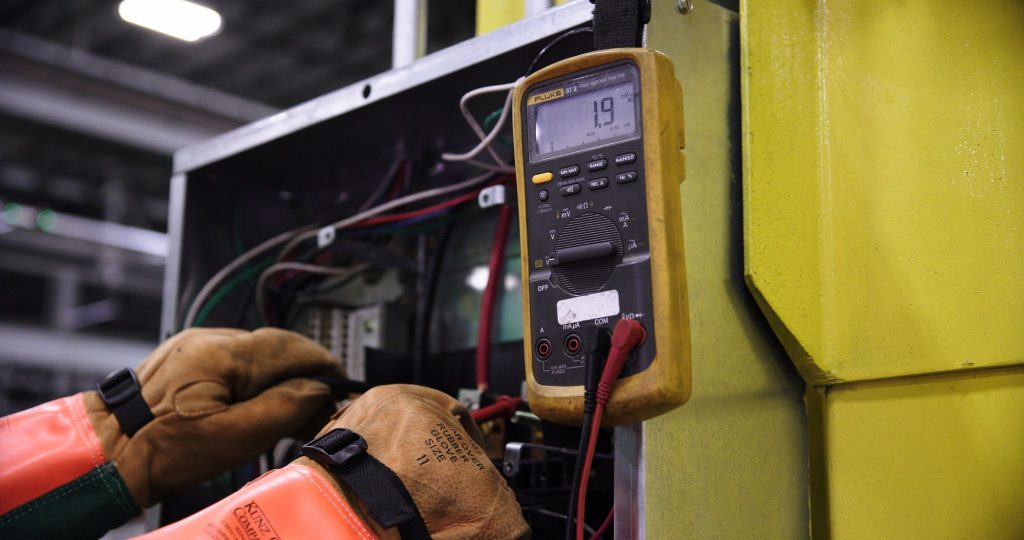
Using multimeters, insulation testers, and clamp meters, the electrician checks voltage, current, and insulation resistance. They may also inspect the earthing system and look for signs of overheating. For complex systems, they might use thermal imaging to spot hot spots.
Step 3: Repair and Verification
Once the fault is found, the electrician will repair or replace the faulty component. This could be a damaged cable, a worn contactor, or a loose terminal. After the repair, they will test the circuit under load and confirm that everything works safely.
Step 4: Reporting and Recommendations
You should receive a clear explanation of what went wrong and what was done. The electrician may also recommend improvements, such as upgrading cables or adding electrical maintenance services to prevent future downtime.
Preventing Future Faults with Electrical Maintenance Services
Reactive repairs are expensive. A single hour of downtime can cost more than a year of preventive maintenance. Regular electrical maintenance services include inspecting DB boxes, tightening connections, testing ELCB/RCD devices, and checking cable insulation. This is especially important for factories running heavy machinery.
If your building has not been inspected in years, consider a full electrical installation services audit. An electrician can review your load distribution, earthing, and protection devices. They can also advise on electrical wiring services upgrades if your current system is outdated or overloaded. For any repair needs, choose a provider that offers reliable electrical repair Malaysia wide, with experience in industrial settings.
Good maintenance also helps you comply with insurance and safety requirements. It shows due diligence and protects your workers and assets.
When to Call a Professional Electrical Contractor
If you notice frequent tripping, burning smells, flickering lights, or warm DB boxes, do not wait. These are signs of a serious problem that could lead to fire or equipment damage. Call a qualified electrical contractor Malaysia immediately. Attempting DIY repairs on industrial systems is dangerous and may void warranties or insurance.
For planned work, such as new machine installations or layout changes, engage an electrician early. They can help with load calculations and ensure your TNB supply is adequate. This avoids costly delays and ensures compliance with MS IEC wiring standards.
Need help with industrial electrical troubleshooting or a preventive maintenance plan? Our team at Nisham Electrical is ready to assist. We provide inspections, quotations, and site visits for factories, offices, and commercial buildings across Malaysia. Contact us today to discuss your needs and keep your power safe and reliable.