

When your business grows, your electrical needs grow with it. A shop adding air-conditioners, a café adding chillers, or a small factory adding machines all put extra pressure on your wiring. A proper commercial electrical installation makes sure your supply can handle the load safely. This guide explains what the work involves, what to check, and how to avoid common mistakes.
Why Commercial Electrical Installation Is Different From Home Wiring
Commercial premises usually run heavier loads and longer operating hours than a house. Shops, offices, restaurants and workshops often need three-phase supply, dedicated circuits for equipment, and proper load balancing across phases. A home-style setup simply may not cope.
Businesses also face stricter safety expectations. Customers, staff and stock are all on site. Faulty wiring can cause tripping, downtime, equipment damage, or worse — fire. That is why a licensed electrician should handle the design and installation from the start.
Single-phase vs three-phase
Most small shops run on single-phase. If you use heavy equipment — commercial ovens, compressors, lifts, or multiple air-conditioning units — you may need three-phase. Your electrician can check your TNB supply and advise whether an upgrade application is needed.
Load calculation matters
Load calculation is simply adding up everything that draws power and checking whether your supply and distribution board (DB box) can handle it. Skipping this step is one of the most common causes of nuisance tripping and overheating.
What a Proper Commercial Installation Includes
A good installation is more than pulling wires. It is a planned system that protects people and equipment. Here is what you should expect from a reputable electrical contractor Malaysia businesses trust.
- Site survey and load assessment — checking your current supply, DB box and existing circuits.
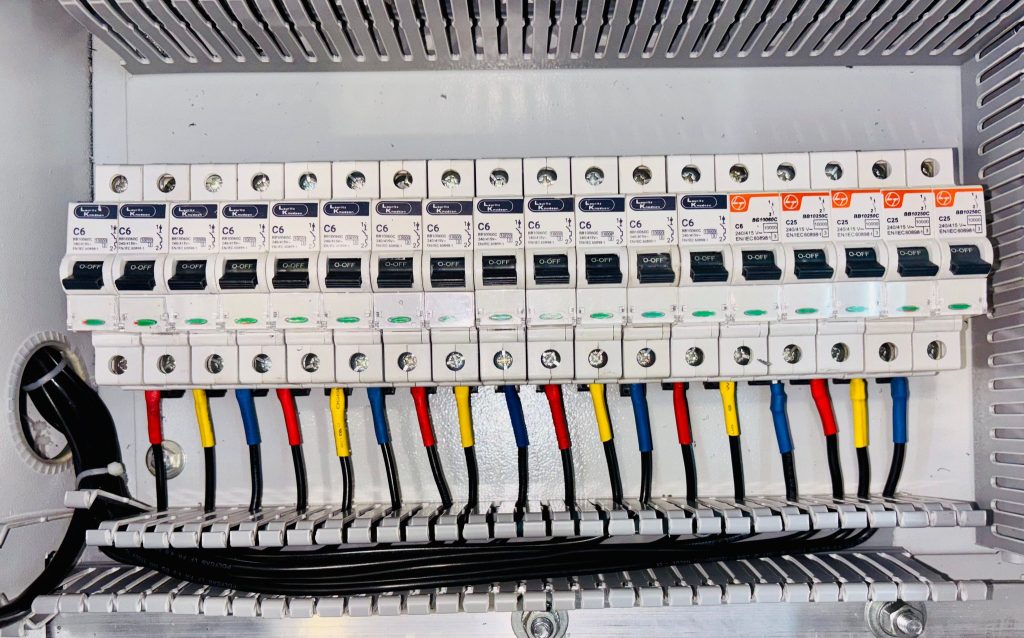
- DB box and circuit design — planning MCBs, RCD/ELCB protection and spare capacity for future growth.
- Cabling and conduit work — proper routing, sizing and support following MS IEC wiring standards.
- Earthing system — a safe path for fault current so protection devices trip quickly.
- Testing and commissioning — insulation resistance, earth continuity and RCD trip tests before handover.
- Documentation — a simple single-line diagram and circuit labelling for future maintenance.
If your existing setup is old or overloaded, a partial or full rewiring may be needed. This is where experienced electrical wiring services save you money — doing it right once avoids repeated breakdowns.
Safety Devices You Should Never Skip
Protection devices are your first line of defence. They are not optional extras. Make sure your installation includes them and that they are tested regularly.
RCD / ELCB protection
An RCD (also called ELCB) cuts power when it detects leakage current. This protects people from electric shock. It is especially important in wet areas like kitchens, washrooms and outdoor signage.
MCBs and circuit separation
MCBs (miniature circuit breakers) protect wiring from overload and short circuits. Separating circuits — lights, sockets, air-conditioning, equipment — means one fault does not shut down your whole premises.
Earthing and bonding
Proper earthing keeps metal parts safe to touch. Without it, a fault can energise equipment frames and expose your staff to danger. Your electrician should test earth continuity as part of commissioning.
After Installation: Maintenance and Repairs
Installation is not the end of the story. Commercial systems work hard every day. Planned electrical maintenance services help you catch loose connections, heat damage and aging insulation before they cause downtime.
Even with good maintenance, issues happen. When they do, quick electrical repair Malaysia businesses can rely on keeps your operations running. Common signs you should not ignore include frequent tripping, burning smells, warm switch plates, flickering lights and buzzing sounds from the DB box.
For reliable electrical installation services, look for a contractor who explains the work clearly, provides a proper quotation, and follows safety standards. Ask about their experience with premises like yours, and confirm they will test and label everything before handover.
Planning ahead also helps. If you expect to add equipment later, tell your electrician now so they can size cables and the DB box with spare capacity. It is far cheaper than redoing the work later.
Ready to upgrade your business premises? Contact our electrical team for an inspection, a clear quotation, or a site visit. We will assess your load, check your DB box and recommend the safest, most practical solution for your commercial electrical installation.