

If you run a shop, office, restaurant or small factory in Malaysia, the electrical wiring behind your walls is not something you can afford to ignore. A poorly planned commercial electrical wiring system can cause tripping, downtime or even fire. But where do you start? This guide walks you through the key things to check before you begin any wiring work, so you can plan safely and avoid costly mistakes.
Why Commercial Wiring Is Different from Home Wiring
Commercial premises usually carry heavier loads and run for longer hours than a typical home. You may have air-conditioners, chillers, ovens, compressors, servers or production machines running at the same time. That means the electrical wiring services you choose must be sized correctly for the total demand, not just for a few lights and sockets.
In Malaysia, commercial wiring must follow MS IEC wiring standards and meet TNB supply requirements. Unlike a house, your business may need a three-phase supply to handle larger equipment. A proper load calculation helps you decide whether single-phase is enough or whether you should apply for a three-phase supply from TNB.
Another difference is safety and compliance. Commercial buildings often have more people, more equipment and stricter insurance requirements. So the distribution board (DB box), cabling and protection devices must be planned properly from day one.
Key Components of a Safe Commercial Wiring System
Before you compare quotations, it helps to understand the main parts of your electrical system. This way you can ask the right questions and spot any shortcuts.
1. Distribution Board (DB Box)
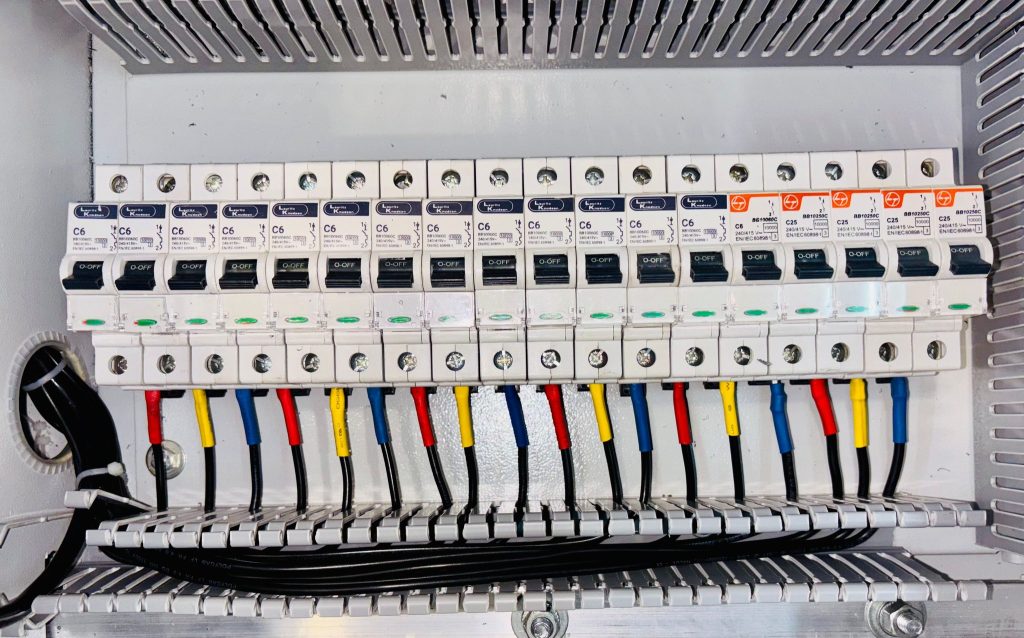
The DB box is the control centre of your wiring. It holds the MCBs (miniature circuit breakers) that protect each circuit, and the RCD or ELCB that trips when current leaks to earth. For commercial use, you may need multiple DB boxes for different zones or floors.
2. Cabling and Conduits
Cables must be the right size for the load and installed in proper conduits or trunking. Exposed or undersized cables are a common cause of overheating. Make sure your contractor uses cables that meet the required standard and keeps them away from water pipes and heat sources.
3. Earthing and Protection
Earthing gives fault current a safe path to the ground, protecting people from electric shock. It works together with the RCD/ELCB and MCBs. Never let anyone skip earthing to save time or cost — it is a critical safety layer.
4. Load Calculation and Circuit Design
A load calculation adds up the power needed by all your equipment and helps decide cable sizes, breaker ratings and the number of circuits. This step is often missed in quick jobs, but it prevents nuisance tripping and overloads later.
- Lighting circuits – separate from power circuits for easier maintenance.
- Power circuits – for sockets, equipment and machinery.
- Air-conditioning circuits – usually dedicated, with their own isolators.
- Emergency and exit lighting – required for many commercial premises.
Planning Your Commercial Wiring Project
Whether you are renovating, expanding or moving into a new unit, good planning saves time and money. Here is a simple step-by-step approach.
Step 1: Site Survey and Load Check
An experienced electrical contractor Malaysia will visit your premises to check the existing supply, DB box condition and cable routes. They will also ask about your equipment and future expansion plans.
Step 2: Get a Proper Quotation
A good quotation should list the scope of work, cable sizes, number of points, DB box type and protection devices. Avoid quotes that are just a lump sum with no details — you want to know what you are paying for.
Step 3: Engage a Licensed Electrician
All wiring work must be done by a competent or licensed electrician. This is not just about regulations — it is about your safety and your business liability. Ask for proof of competency and check that the contractor can handle TNB applications if you need a new supply.
Step 4: Test and Commission
After installation, the system should be tested for insulation resistance, earth continuity and RCD trip time. You should receive a test report and a simple handover briefing on how to use the DB box safely.
Ongoing Electrical Maintenance and Repair
Once your wiring is in place, regular electrical maintenance services keep your business running smoothly. Simple checks like tightening connections, cleaning DB boxes and testing RCDs can prevent small issues from becoming major faults.
If you notice flickering lights, frequent tripping, burning smells or warm socket outlets, call for electrical repair Malaysia services immediately. Do not attempt to fix wiring yourself — even a small mistake can be dangerous.
For businesses with CCTV, alarm or door-access systems, plan the wiring together with your electrical installation services. This avoids messy surface trunking and keeps your security system reliable.
When you need new electrical installation services or upgrades, choose a contractor who understands commercial needs and can work around your operating hours. Many businesses prefer after-hours work to avoid disrupting customers.
Ready to plan your commercial electrical wiring properly? Contact our friendly electrical team for a site inspection, a detailed quotation or a no-obligation site visit. We are happy to answer your questions and help you get it right the first time.